Chadians United!

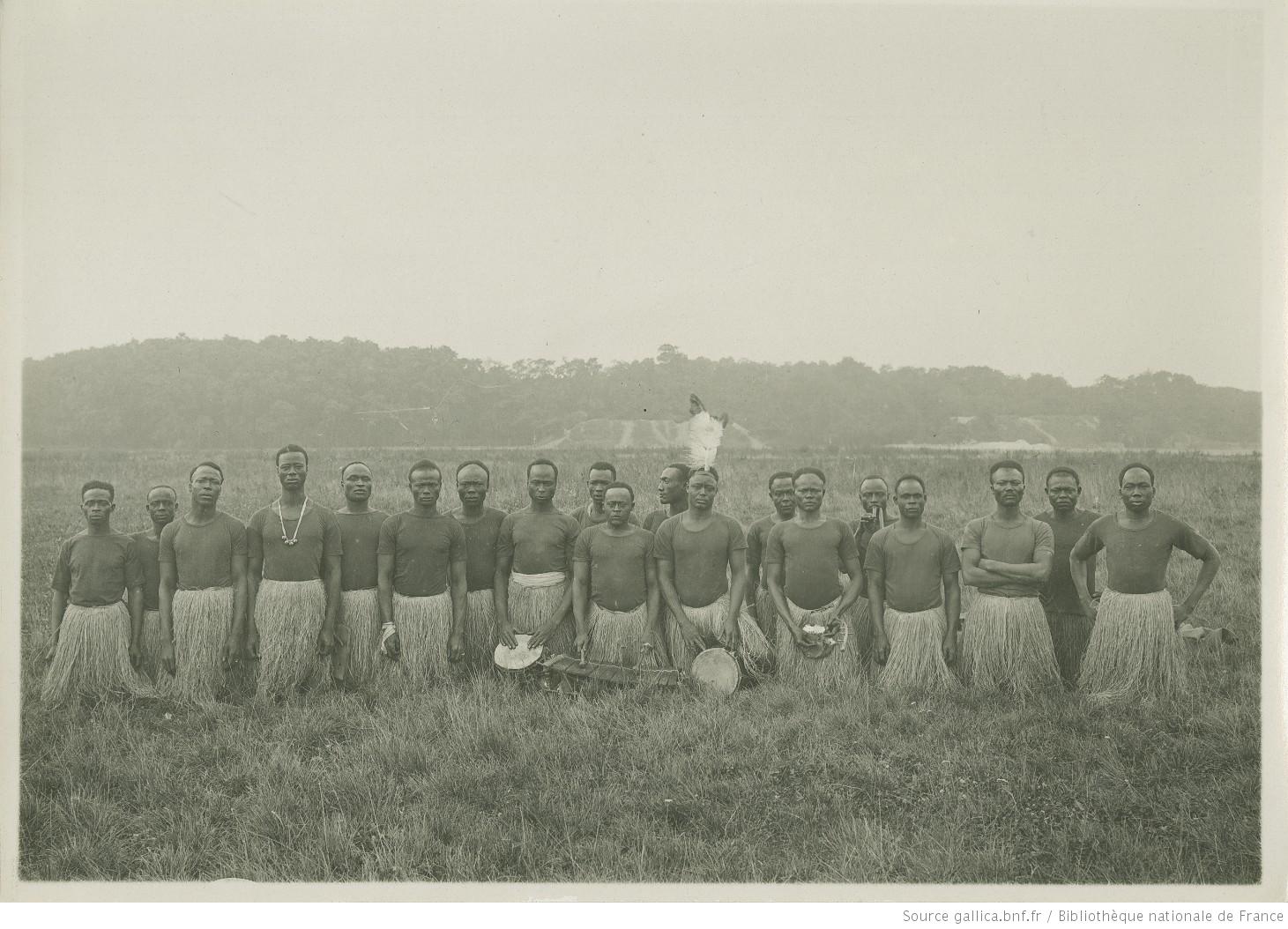
chadiansChad: the country not the man.  A nation apart from the modern world, with struggles far more profound than the state of their music industry.  Yet with roughly 200 different ethnic groups and over 100 languages (French is widely spoken in the south, Arabic in the north), the diversity of music-making in Chad is ever present.  Perhaps in reaction to the neglect the country has received from the world community, Chadians have largely shunned modern music.  Other African rhythms, such as Congolese soukous, have seeped into the soundscape, but traditional instruments still hold sway.

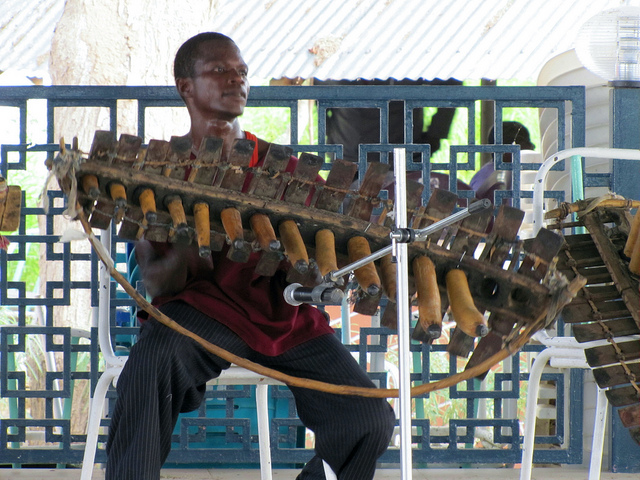
The Chadian balafon has phallic calabashes hanging underneath which act as resonators to give a gritty, distorted sound:
chadhuhu

And then there are Chadians living abroad, making fearless musical hybridity…

Listen to La Seconde Méthode’s sublime first album here.  Hovering somewhere between desert blues and post-rock.  Superbe.

Stream part 1: the Global Mix

Stream part 2: Chad

Pandemonium Panameño

Presenting the sonic spectrum of Panama.. a gorgeous pan-African palette that perplexes the pigeon-hole efficiency of predefined taste.  A country borne out of the complex cultural mixing between Indigenous peoples, Europeans, and Africans, over two thirds of modern-day Panamanians are of mixed-ancestry (called mestizos).

The monumental construction project of the Panama Canal in the early 20th century brought about further diversity, as many black Caribbean workers settled in the country and brought along their own shifting rhythms (calypso, rumba, etc.).  Panama’s music has over time developed a stronger Afro-Caribbean vibe than its other Spanish-speaking neighbors, and there is a real eagerness to combine these with the Latin styles (cumbia, salsa, merengue..) of other Central and South American countries.
Later on, Panama was the first country to create a Spanish offshoot of reggae, known simply as Reggae en Español.  One of the first acts to legitimize this sound was Nando Boom:

We will also explore other modern sounds of Panama, including the unclassifiable Combos Nacionales of the 70s, and some intriguing new psych rock bands.

Stream part 1: Global Mix

Stream part 2: Panama

Gettin’ Tajiki Wit It

Ready for this week’s trip to the great unknown?  This will get you MODERATELY PUMPED UP!!:

That’s right, they had keytars in Tajikistan waaay back in the 80s.  (Also, wireless electricity in the desert)  But more importantly, Tajiks share ancestry and musical history with the people of Iran, so we can safely assume that they have been jamming on guitar-fathers (i.e. the tar and dutar) for centuries..

Hear here: Global Mix

Hear here: Tajikistan

African America

As a tribute to Black History Month, we bring you a sampling of sounds from the unique and vibrant Caribbean nation of Haiti.  The first independent black republic, Haiti is an incredible site of cultural mixing alongside deep respect for traditions.  Music holds the roots in place even while deforestation erodes mountainsides.  Kompa, mini-djaz, vodoun drumming, mizik rasin, french folk, and the sweet melodies of musical liberation…

Man Oman, the land of hidden jams

This week we visit the Sultanate of Oman, a rocky coastal nation with a keen interest in seafaring exploration.  Friends of many, enemies of few, sneaking just below the international tabloids… for simplicity’s sake let’s call it Switzerland of the Middle East.  Heck, they even manage the feat of having positive relations with both Iran and the United States.  They don’t choose sides.  Omanis are easygoing like that.  They have a Sultan after all.

As for the music, there is a vast and complex history of intermingling to draw upon.  Many Swahili rhythms have seeped into the Omani soundscape, as the Omani empire once stretched down the East African coast as far as Madagascar.  There is also the potent influence of Arabic neighbors to the north, as well as the instruments of the Baloch people of Pakistan.  Music is a part of everyday public life in Oman, not often recorded for posterity, and thus many of the sublime sounds from the ground are not readily available to our far-off ears.  We can imagine..  And extrapolate from the few recordings that we have at our disposal:  some gritty hip hop, vocal acrobatics, drums of thunder, and ambient oud sketches..