Sounds) Suppress)) Struggle)))

guineabissau-dance

¡Música!  It will manifest inner strength and help transcend troubles of the material world.  In the case of Guinea-Bissau, a small, perpetually politically-handicapped nation of only 1.5 million humans, the odds against a music industry’s very existence have been overwhelming. ((Manecas Costa’s Paraiso di Gumbe (2003) is considered the first album recorded in the country.  Before then, Bissau-Guineans mostly recorded in Portugal, and neighboring countries Sénégal and Guinea))

Despite the hardships that the people have faced since independence from Portugal in 1974, Bissau-Guineans have created beautiful, culture-unifying music to express their quest for shared emancipation.  Some of the most exceptional music came out of the push for nationhood, as bands such as Super Mama Djombo provided the soundtrack for revolution.

This week’s program features nearly an hour of music spanning the first four decades of Guinea-Bissau’s existence.  The groups display many different degrees of blending between Portuguese and ethnic African influences (chiefly Mandinga and Fula).  I hope you hear something that moves you.

Listen to the sounds of Guinea-Bissau here.

Malay of Many Flavas

Sabah.  Malaysian Borneo.  Bajau Sea Gypsies.  Ocean Nomads.  Breath divers.  Malaysia. Pic: Copyright Timothy Allen. IT IS FORBIDDEN TO REPRODUCE THIS IMAGE IN ANY MEDIA WITHOUT WRITTEN PERMISSION. BBC Human Planet /m/loader/final_group_loader/Oceans SabThis week we sample the wildest sounds of the modern Malaysian soundscape…  The many mixings of Chinese, Indian, Indigenous and European peoples have manifested to form a frothy stew of electronic strangeness!  Hear many kinds of rock (space, grindcore, garage, surf, ambient, unidentifiable), throwback hip pop, and ancient drums stomp on our untamed journey…

Hear the first hour’s global mix HERE

Hear the Malaysian feature HERE

The Batswana Groove

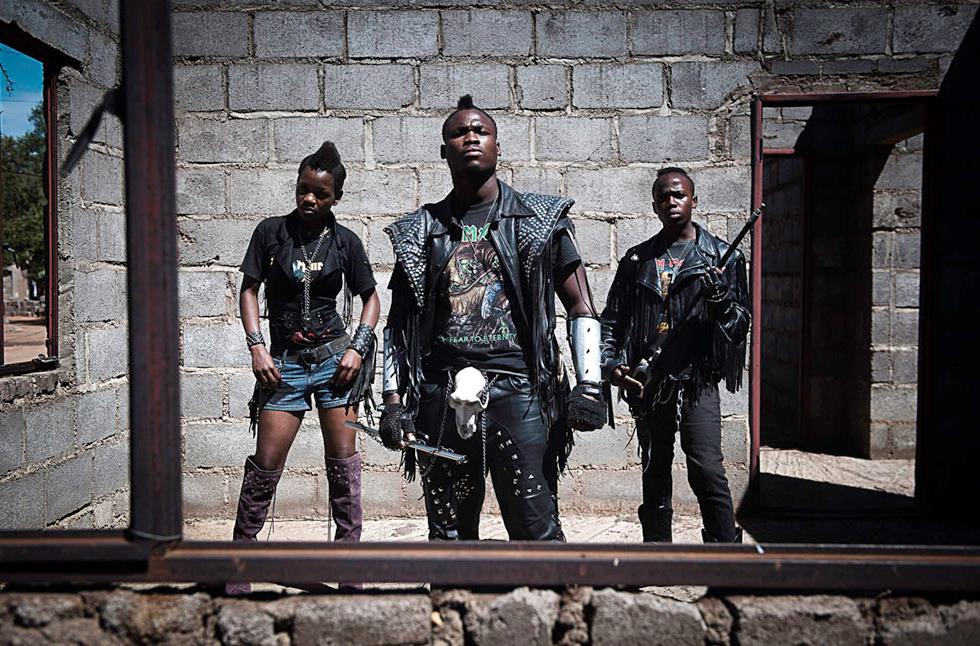
Welcome to the new mecca of heavy metal…

Gaborone, Botswana

Gaborone, Botswana

Against the odds, the African nation of Botswana has not only become a successful and peaceful country in the half-century since achieving independence, but has also developed a thriving heavy metal scene.  Coincidence?  Perhaps.  But still, with the care and precision it takes to cultivate the classic metal lifestyle, it seems more like an honorable religion than the devil’s music.. doesn’t it?

Other Batswana sounds are less Norwegian and more South African.  Seeing as Gaborone, the capital and largest city of Botswana, hugs the border of South Africa, many of the styles from down south are now firmly entrenched in the soundscape of Botswana– most notably Kwaito and electro-hip hop.

Hear these and much more on our BOTSWANA SPECIAL!

And hear the weekly Global Mix right ova here.

Ritmos ya Ngola

We have grown familiar with the sensation of biting into unexpected musical delicacies.  Even so, this trip caught us off guard.  The richness of musical experiments being cooked up in Angola throughout the 60s and 70s, as the south-western African country was wriggling its way towards independence, was a bittersweet beauty to behold.  With hundreds of years of Portuguese influence, and groovin’ musical neighbors like Zaire (now the D.R. Congo) setting powerful precedents, Angolan musicians  were ripe to develop their own hotpot of dance styles.  Though very few Angolan musicians achieved recognition outside the country, the local scene thrived and supported its own artists.

Our feature on Angolan music is slanted heavily towards this time period, when garage rock, semba (a cousin of Brazilian samba), kizomba (upbeat marimba big band), and a myriad of other styles were helping to articulate the struggle for freedom, and create a sense of hope for the people.  The years between 1975-2002 were plagued by civil war, and the music industry suffered as many artists were killed or forced to leave the country.  But Angola is now home to one of Africa’s most dynamic hip hop scenes, as well as a style of frenetic electronic music known as kuduro that has taken the lusophone world by tropical storm.

Also on the show: Evan Catalano, a blue-haired punk rocker from Nelson-based band Thus Far, who discusses and debuts songs from the band’s new EP… recorded last week!

A Fullblown Gugak and Yangak Sonic Attack!

All hands and ears are back at the control board this week.  As South Korea is busy launching rockets into space, we have been given the heroic mission of exploring the many peaks and valleys of the South Korean soundscape..  The old (the Gugak), the new (the Yangak), the psychodilly 70s, the drum n bass music of 1672, , the hiphop, the trot, and nary a K-pop song in the lot (we respect you).  Yes, South Korea, in all its world-friendliness, has grown into the sophisticated polar-opposite of its twin (the Korea we don’t talk about).  But for all the modern dilemmas of open and closed minds, the twin Koreas will always share the same Gugak.  History is something you can’t take back.  Ditto for disco funk.

Alright I admit it, we couldn’t fit any Trot into the program.. but it’s an important piece of the Korean puzzle – the first global style to be adapted by Korean musicians, back when the nation was one.  So here’s some good ol’ Japa-merican inspired Foxtrot for you swingers out there: